This is part 2 of a three-part adaptation of my 2026 presentation at the European Identity and Cloud Conference. Part 1 was released in the wake of a series of Supreme Court Rulings that changed the meaning of what it means to be “legal” in the United States. I release Part 2 on the day that Marco Rubio, US Secretary of State, proposes extinguishing the legacy of the Nuremberg Trials by dismantling the International Criminal Court that prosecutes War Crimes, Crimes Against Humanity, and Genocide. He does this while the U.S. has been accused of conducting – or considering – all three.
Lesson 2: We urgently need legal protections!
Innovators and the technologies they produce need guardrails. Current events in the US demonstrate the impact of inadequate privacy legislation and limited legal precedents. Since 9/11, government surveillance has increased exponentially.
Without comprehensive privacy legislation, companies will collect vast amounts of data. Willingly or unwillingly, these companies then become partners in government surveillance programs. This isn’t unprecedented: AT&T and Verizon opened the door to U.S. spying on all internet traffic by simply allowing them to tap into the network.
Even if a company is unwilling, the majority will comply with subpoenas rather than fight the government in court, especially when they see the costs of resistance: Anthropic was declared a supply chain risk for refusing to let the government use its AI technology to spy on US citizens or conduct lethal unsupervised attacks.
Technology – sometimes the technologies we’re building – enable abuses to spiral out of control.
Flock security cameras have been used by police forces to:
- Stalk women they are dating or have dated
- Surveil protesters
- Target, track and arrest women suspected of seeking an abortion
Amazon’s Ring created an outcry when it aired a superbowl ad showing how all the cameras in a neighborhood could be activated at once to find a pet. Of course, people imagined a future in which they could be tracked like dogs.
Clearview AI, the facial recognition software used by ICE, is being used to “disrupt, degrade, and dismantle people and networks viewed as security threats” – which is, notably, the same language that the White House uses to talk about anyone associated with opposition to the current administration. Perhaps that is why ICE agents know the names and addresses of protesters.
Palantir’s “ELITE” and ImmigrationOS tools synthesize data from identity systems including student visitor data, IRS data, health and human services data, CLEAR, social media – all so law enforcement has AI powered dossiers on individuals and can track them in real time.
This data can be collected and synthesized for all US citizens regardless of whether warrants have been issued or a threat is posed.
We URGENTLY need legal protections.
…But the law is a social construct!
Belief in the law itself is changing in the United States.
The framers of the U.S. Constitution were deeply influenced by international law, specifically the Law of Nations. By the 20th century, the US played a leadership role in the evolution of international law and the Universal Declaration of Human Rights.
- We agreed that everyone has a right to an identity (Article 6).
- We agreed the rights of asylum seekers and refugees.
- We agreed the rights of foreign nationals.
- We signed on to prevent statelessness.
- We agreed what constitutes a war crime and what is genocide.
- We signed on to treaties.
- We also exercised our sovereignty by NOT signing on to others – like the UN Convention on the Rights of the Child and the treaty on Forced Disappearance.
According to Yuval Noah Hariri, it is our ability to create these institutions – these shared stories – that enabled early homo sapiens to establish societies and thrive. Without shared stories and institutions we resort to physical power and coercion.
(Note what Stephen Miller says here about the U.S. right to oust Maduro and/or take Greenland by force: “we live in a world that is governed by strength, that is governed by force, that is governed by power…. by definition, we are in charge…”)
But the current U.S. administration argues that, not only does international law not apply, but it doesn’t exist – despite the many treaties we have signed.
This is how we justify:
- Bombing boats in the Carribean, killing the survivors in violation of maritime law
- Toppling the Maduro government in Venezuela
- Attacking civilian infrastructure
- Threatening to commit genocide in Iran
And this is why, today, Marco Rubio proposed dismantling the International Criminal Court.
In addition to refuting international law, the administration refutes U.S. law too:
- From rendering legal – and non-criminal – immigrants to torture prisons in third countries without a trial
- To refusing to investigate officers responsible for the deaths of protesters in American streets
- It is worth mentioning the 2 people shot and killed by ICE over the last week in Maine and Texas.
They are scaling up a system associated with record deaths.
How does this relate to identity systems or standards?
- In this United States, would the governor of Texas DECLINE to use a state-issued wallet or server retrieval token to track a teenage girl suspected of seeking an abortion out of state?
- Would Stephen Miller observe a policy guidance document on use of government identity systems when he wants to track down Joanie, your local organizer who hands out the whistles to folks like Renee Good?
If the state is going to surveil, they’re going to surveil. But we don’t need to make it easy. And we cannot depend on policy safeguards alone.
We need a community response
I want to see rights-enhancing identity technology, policy, and infrastructure in the United States – and all over the world.
These are not challenges that will be won or lost in a single battle. And they certainly won’t be won alone.
Legal protections need to be underpinned by technical protections, and vice versa.
Civil society needs a voice in technology, and needs a voice in legislation to frame technical development.
Individuals – citizens, non-citizens, users, employees, and innovators – need a voice equal to institutions and corporations.
And in our roles as citizens, neighbors, AND as innovators, we need to assert that voice.
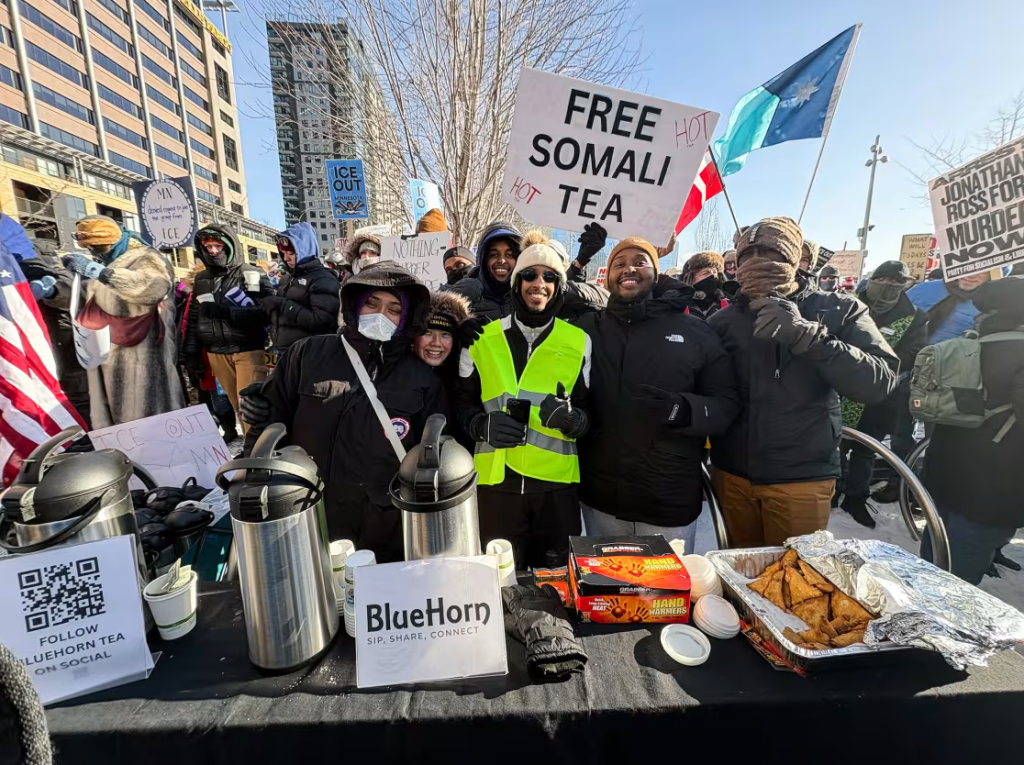
source: NBC News / Matt Lavietes
What we learned from Minnesota is that bravery grows with friendship, with community.
Winning our civil rights back requires fighting this battle on all sides. Engaging in difficult conversations.
In Part 3, we’ll discuss what to do about it.